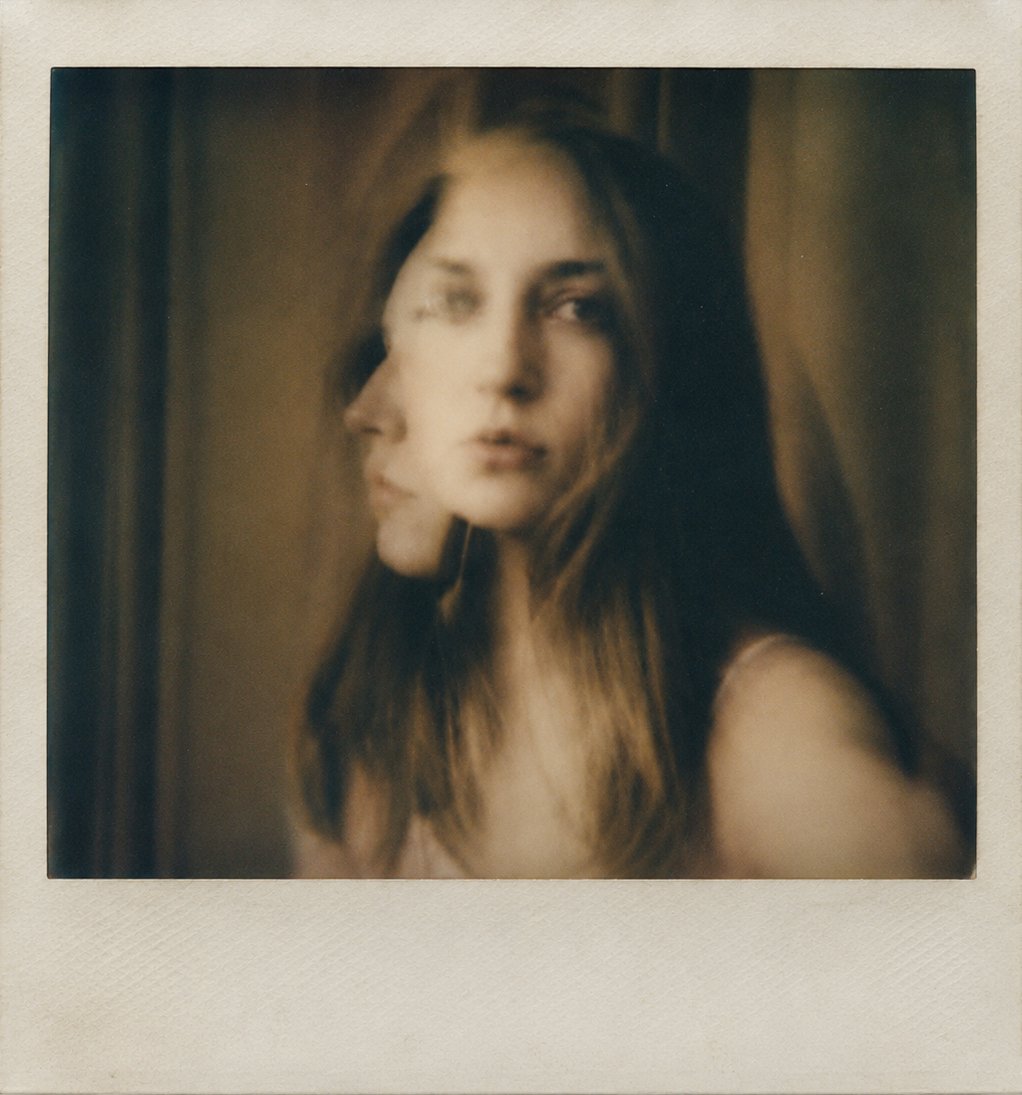
Elika Ostrov is a Russian-Estonian musician based in Berlin. In her DIY process of making, language tied to the voice acts as the initiator of an esoteric sound montage: she works with voice and field recordings to summon particular sounds, and the act of composition takes on the character of an exorcism — a form of sound mediumship in which her body becomes the vessel and invisible entities are given leave to speak.
Her sound draws on the tones of horror cinema, parasomnia, and incantation. In her soundscapes religion becomes a secular backdrop, intertwined with the pagan influences of her upbringing. Her work is defined by a many-faced persona: cosmic forces, though unseen, exist in the music as voices with their own weather.
Her minimal electronic setup consists of a microKORG and a Microphonic Soundbox (LeafAudio). She is drawn to what she calls gentle violence in sound — a delicate balance achieved by manipulating frequency and noise, navigating the edge between soft and sharp until listening becomes a visceral experience. Beginning with drums as her first instrument and extending through guitar, flutes, violins and pianos, she treats instruments — and non-instruments: kettles, tractors, snow — as extensions of the body.
Her debut album Confessions of an Imposter (2022) was released on the Irish cassette label Fort Evil Fruit and described by Beats Per Minute as “a remnant of some nighttime fantasy or lingering terror.” It received airplay on NTS Radio, RTÉ, Dublin Digital Radio, Scolopendre and CAMP Radio, and appeared in the 2022 Boomkat charts. The album was produced by the filmmaker Rouzbeh Rashidi, who also created its cover and the music video for “Forgiven.”
Her second album, God Is Everything You Are Not (2026, Fort Evil Fruit), extends this practice into the territory of grief. Composed of seven pieces and closing with a sixteen-minute title passage in which the songs that precede it are allowed to dissolve into a single duration, the record approaches loss not as narrative but as a threshold to be crossed — lived memory slowly converted into ritual sound. Working again with voice, microKORG, the Microphonic Soundbox and field-recorded material, Ostrov treats absence as a substance with its own weight and weather, neither mourned nor resolved but inhabited. Byron Coley received it in The Wire (Issue 509) as “surreal slabs of sonic art,” and it was carried on air by WFMU, KZSU, CRMK, CAMP Radio and éist.
Across both records — and the writing that moves alongside them — a single question persists: what it is to let the unseen speak, and to stay in the room while it does.